
On 11 December 2025, the National Assembly has passed the Resolution on amending and supplementing Resolution No. 98/2023/QH15 (“Resolution”), establishing a special institutional framework for Ho Chi Minh City as Vietnam’s economic powerhouse. A key highlight of the Resolution is the expansion of special mechanisms relating to land, finance, strategic investor attraction, and delegated authority for the municipal government to accelerate major projects. Notably, Vietnam for the first time introduces the Cai Mep Ha Free Trade Zone (“FTZ”), a port-based free trade zone equipped with extensive incentives on taxation, land, labour and foreign exchange, aiming to develop a regional logistics – industrial - commercial hub for Southern Vietnam.
1. Newly introduced and revised mechanisms applicable to Ho Chi Minh City
The Resolution expands several special mechanisms to empower Ho Chi Minh City with enhanced legal vehicles to attract strategic investors and implement large-scale infrastructure projects.
Expansion of sectors eligible for strategic investors
The Resolution introduce additional 11 groups of strategic projects under Article 7 of Resolution 98/2023/QH15, focusing on large-scale, high-impact infrastructure developments in transport, urban development, tourism, culture - sport, specialised healthcare, clean energy, logistics, environmental projects, and areas with particularly difficult socio-economic conditions. Specifically:
• Urban railway/trainway along the Saigon River (from VND 6,000 billion).
• Mixed-use urban area developments (from VND 50,000 billion).
• Integrated sports complexes, cultural parks and theme parks (from VND 15,000 billion).
• Luxury hotels, resorts and integrated entertainment complexes with golf/casino (from VND 35,000 billion).
• Infrastructure investment for FTZs, industrial zones, non-tariff zones and high-tech zones (from VND 30,000 billion).
This expanded list creates a broader legal basis to attract financially capable and technologically advanced investors for large-scale, catalytic projects with spill-over effects on urban development, services, technology and the environment.
Conditions for strategic investors
The Resolution tightens eligibility criteria through stringent requirements on financial capacity and experience, including:
• Minimum equity capital of 15% of the total investment.
• Equity capital thresholds ranging from VND 500 billion to VND 20,000 billion depending on project type (transport infrastructure, urban development, tourism, FTZ projects, etc.), together with proven experience in implementing similar projects valued from VND 2,000 billion to VND 25,000 billion.
Investors must also commit to workforce training, national defence–security and environmental protection.
Direct appointment of investors and expanded authority for People’s Committee of Ho Chi Minh City
Building upon the standardised eligibility criteria for strategic investors, the Resolution allows the direct appointment of investors for projects within the priority list. This represents a shift from competitive bidding to a more limited direct selection mechanism, aimed at shortening capacity assessment, negotiation and approval procedures, thereby expediting the implementation of projects considered urgent and strategically significant..
At the same time, authority of People’s Committee of Ho Chi Minh City is significantly broadened:
• Decide on land use within the City without being strictly bound by national land allocation quotas, land use plan, with adjustments to be reflected in subsequent planning cycles.
• Provide guarantees for enterprises to borrow abroad or issue international bonds.
• Permit for strategic investors to mortgage land-use rights with one-off payment at foreign credit institutions.
These mechanisms create greater flexibility in land administration and in mobilising medium- and long-term capital from international markets, but they also entail higher requirements for public financial risk management, transparency in project approvals, and accountability of the local government.
2. Special investment incentives for the Cai Mep Ha FTZ
The Resolution introduces, for the first time in Vietnam, a seaport-based Free Trade Zone model. Unlike a financial centre—which focuses on banking, investment, financial products and cross-border capital flows—the Free Trade Zone is designed for goods trading, logistics, manufacturing and transshipment, with an emphasis on incentives relating to customs duties, corporate income tax, land regime and foreign-exchange payments for commercial activities. In other words, while a financial centre manages ‘flows of capital’, the FTZ is structured to manage “flows of goods and supply chains”.
On that basis, the Resolution establishes a “special institutional package” for the FTZ, comprising incentives on corporate income tax, land, investment procedures, foreign labour, foreign exchange and customs, enabling the Cai Mep Ha FTZ to operate in line with international practices and to compete with regional FTZ models.
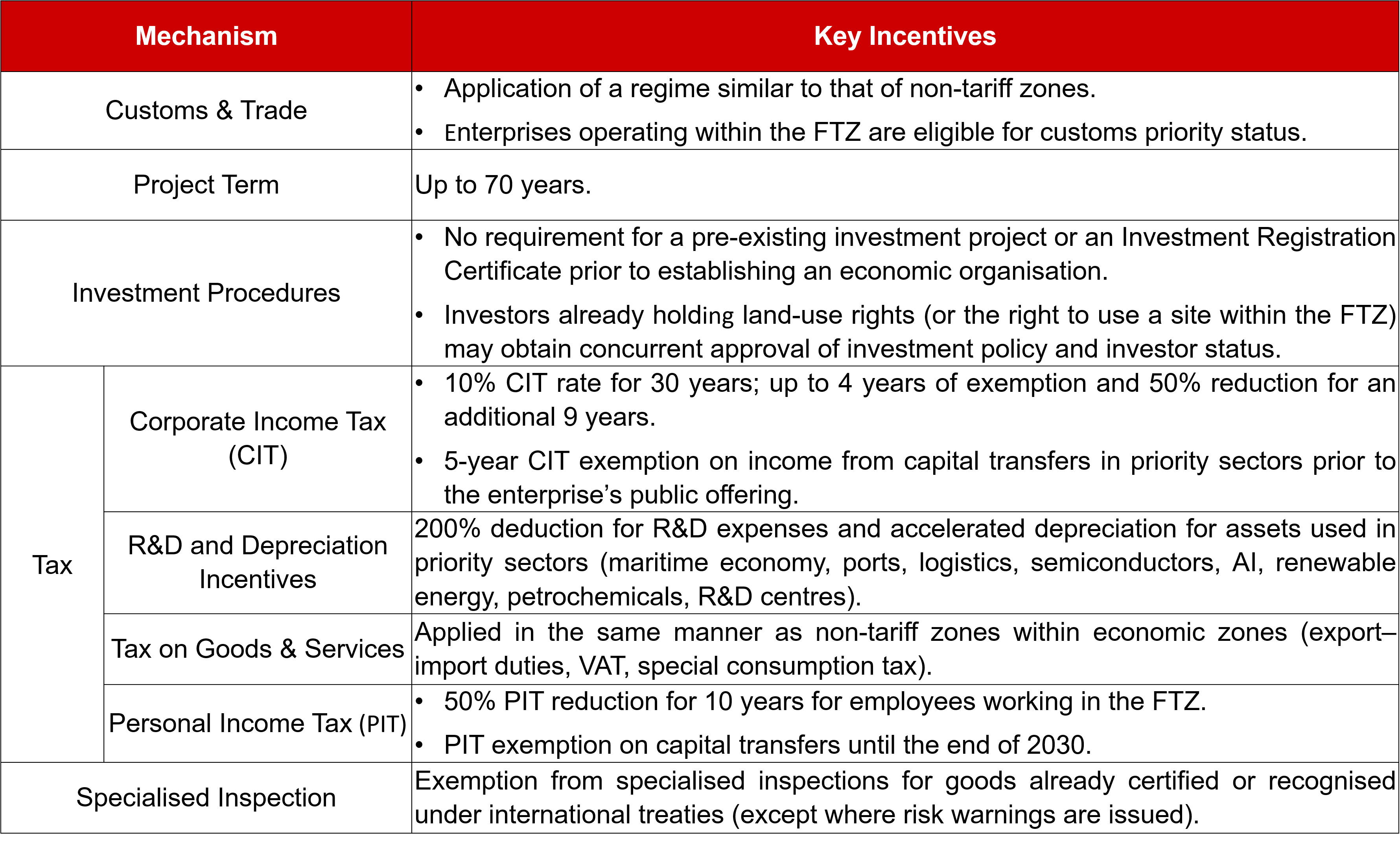
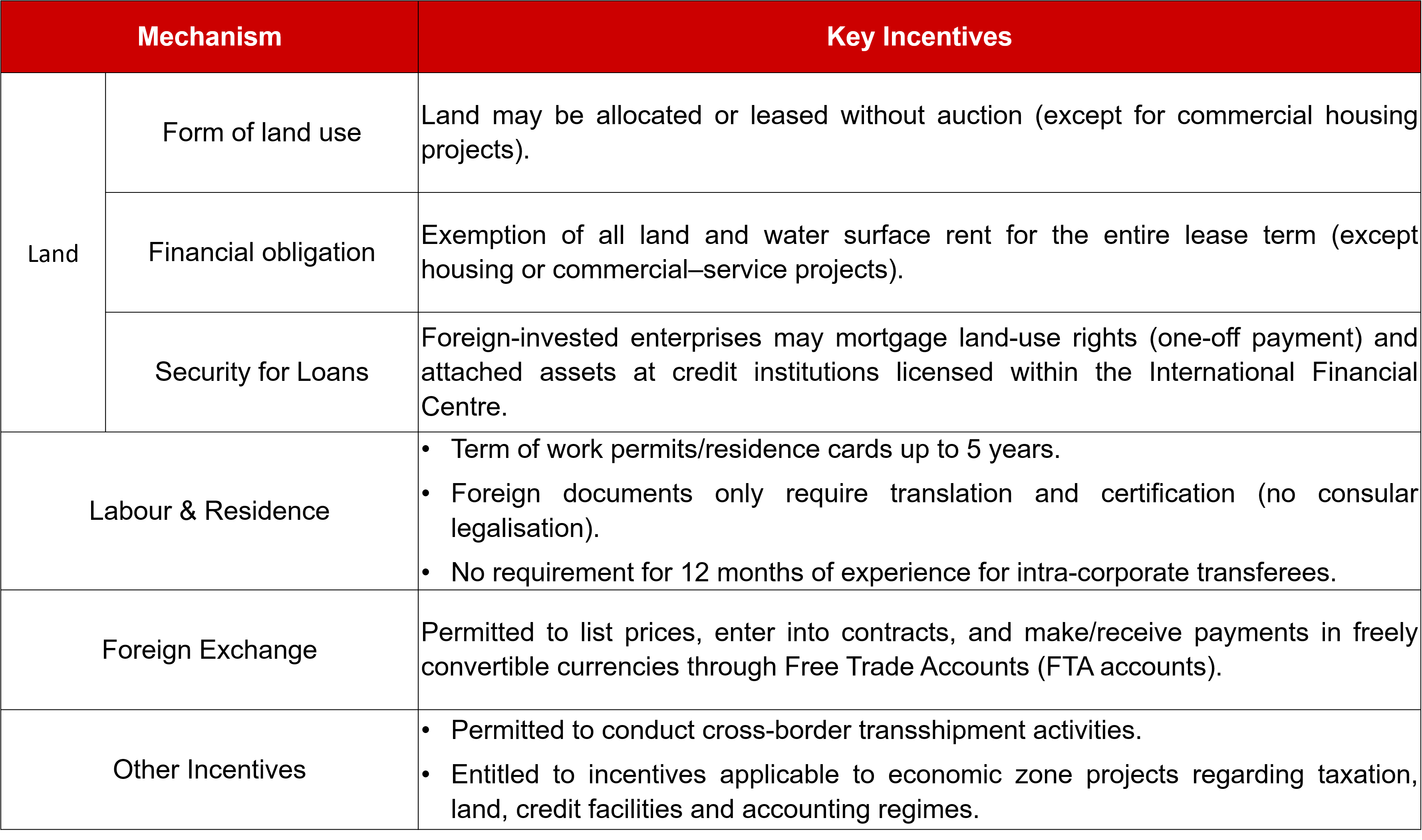
Overall, the Cai Mep Ha FTZ establishes a markedly more investor-friendly environment through streamlined procedures, flexible foreign exchange mechanisms and one of the most competitive tax–land incentive packages currently available in Vietnam. As the first port-based FTZ in the country, it is poised to become a strategic destination for multinational logistics, high-tech manufacturing and transshipment operations, while strengthening Vietnam’s position as a competitive regional trade and logistics hub.
Managing Partner
VIAC Listed Arbitrator
Vice Director of Vietnam Mediation Center


Anti-Bribery and Corruption Policy: LNT & Partners has issued and maintained the policy in complying with all applicable laws and regulations on bribery and corruption in Vietnam and worldwide.

